
We Are Here To Help
At Guerard’s, we believe in furniture for better living that lasts for generations. To help you keep your pieces in top condition, we recommend reviewing our Furniture Care Guide below—you may find the quick solution you're looking for! If you still need a hand, please reach out to us, and our team will be happy to assist you.
Furniture care guide
Cushions: What to Expect
New cushions will soften and settle with normal use, especially during the first few months. This is expected and does not usually indicate a defect. Seat cushions are typically built for support, while back cushions are often designed for comfort and softness. Fibre-filled, feather-blend, and loose-back cushions need regular attention to maintain their shape.
Rotate seat and back cushions regularly when possible.
- Flip cushions where the design allows.
- Fluff loose-back, fibre-filled, feather-blend, and toss cushions by hand.
Smooth fabric and cushion surfaces after use, especially on soft or deep-seated styles. - Avoid sitting in the exact same spot every time if the furniture has multiple seating
positions.
Please contact us if one cushion becomes dramatically flatter than the others, will not regain shape after proper fluffing, has an obvious empty area, or appears to have a seam, zipper, or internal casing issue.
Fabric Upholstery Care
Fabric upholstery should be cared for regularly to prevent soil, dust, and body oils from building up in the fibers.
• Vacuum fabric regularly using an upholstery attachment.
• Blot spills immediately with a clean, absorbent cloth. Do not rub.
• Keep furniture away from direct sunlight where possible to reduce fading.
• Avoid placing upholstery near strong heat sources or high-humidity areas.
• Do not use household cleaners, bleach, solvents, or aggressive stain removers unless specifically recommended for your fabric.
For spills or stains, always refer to the cleaning code or care instructions for your specific fabric before applying any product.
Leather Upholstery Care
Leather is durable, but it is not maintenance-free. Regular cleaning and conditioning are essential to help protect the finish, reduce dryness, and limit damage caused by body oils, perspiration, dust, and everyday use.
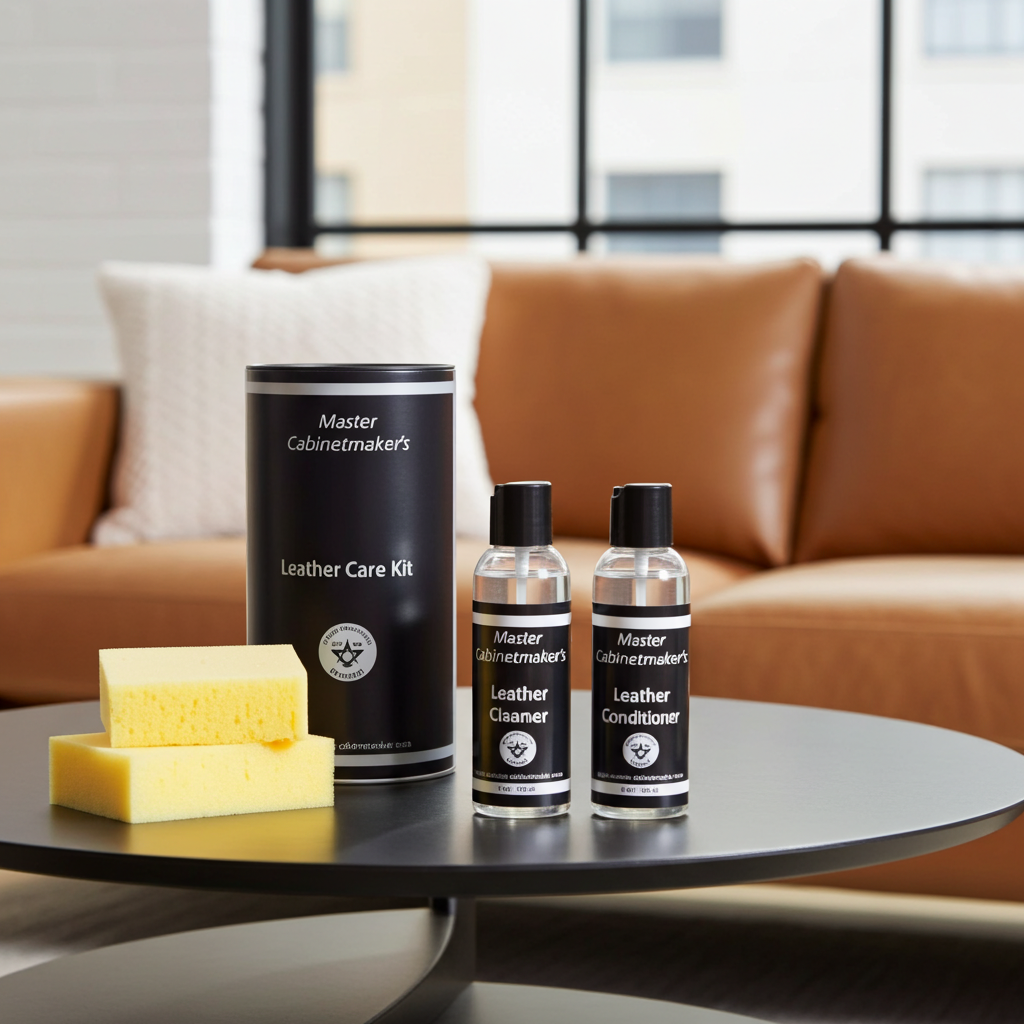
We recommend cleaning and conditioning leather upholstery seasonally — approximately four times per year. Cleaning should always be followed by conditioning. Cleaning removes soil, body oils, and residue from the leather surface.
Conditioning helps keep the leather protected and reduces the chance that body oils will penetrate the finish and contribute to dye damage or discoloration. Body oils and perspiration can be especially damaging on headrests, armrests, and favorite seating areas. Individual body chemistry varies, and some medications, topical treatments, skin creams, hair products, and sunscreens can change the residue left on leather or make perspiration and body oils more damaging to the leather finish.
Customers taking regular medications or using topical products should be especially diligent with cleaning and conditioning high-contact areas. Once leather dyes or finishes are damaged by oil absorption or discoloration, the damage may not be repairable through normal cleaning.
• Dust leather regularly with a soft, dry cloth.
• Clean and condition seasonally using appropriate leather-care products.
• Pay extra attention to headrests, arms, and high-contact areas.
• Keep leather away from prolonged direct sunlight and strong heat sources.
• Avoid hair products, skin creams, pet oils, sunscreen, and household cleaners on leather surfaces.
• Do not use saddle soap, alcohol, baby wipes, dish soap, or all-purpose cleaners.
Always test any leather-care product
in an inconspicuous area first, and follow the product instructions carefully.
Everyday Living
All upholstery materials can be affected by sunlight, heat, humidity, and dryness.
To help protect your furniture:
• Avoid prolonged direct sunlight.
• Keep furniture away from heat registers, fireplaces, radiators, and baseboard heaters.
• Maintain a stable indoor environment when possible.
• Use window coverings in bright rooms to reduce fading and heat exposure.
Furniture is meant to be used, but some everyday habits can shorten its life.
• Keep pets’ nails trimmed.
• Use throws or covers in high-use pet areas.
• Avoid eating oily foods directly over upholstery.
• Clean high-contact areas before soil becomes visible.
• Do not allow damp items, dark denim, or heavily dyed fabrics to sit on light upholstery.
Power Recliners, Lift Chairs, & Battery Packs
Many power furniture service concerns are caused by simple connection or charging issues. Before requesting service, please check the basics below.
• Confirm the chair or sofa is plugged into a working wall outlet.
• Check that the power cord, transformer, battery pack, and chair wiring are firmly connected.
• If the furniture was recently moved, vacuumed around, or cleaned underneath, inspect the cords and connectors.
• If you heard something drop or hit the floor near the chair, a cable end, transformer, or battery connection may have come loose.
• Look behind and underneath the furniture for loose round plugs, multi-pin connectors, transformer bricks, or disconnected cable ends.
• Do not force any connector. If a plug does not line up easily, stop and contact us.
• Keep cords clear of the reclining mechanism, metal frame, pinch points, pets, and foot traffic.
If basic connection and charging checks do not solve the issue, please contact us. We are happy to help determine whether an in-home service visit is needed.
• Use only the charger, battery pack, and power supply approved for your furniture.
• Fully charge battery packs before first use when applicable.
• Recharge batteries regularly and avoid storing a battery completely discharged.
• Do not leave a battery charger plugged in continuously 24/7 unless the manufacturer specifically recommends it.
• Regular charge and discharge cycles help batteries perform more reliably.
• Built-in USB ports are intended for convenient device charging. Using USB ports while operating power furniture, charging a battery, or running the chair from battery power may increase power draw, slow charging, or reduce the number of chair cycles available from the battery.
• If the chair operates slowly, inconsistently, or not at all, check both the power connection and battery charge before assuming the mechanism has failed.
If basic connection and charging checks do not solve the issue, please contact us. We are happy to help determine whether an in-home service visit is needed.
First-Year Service Guidance
During the first year, it is normal for cushions and upholstery to relax with use. Softening, light wrinkling, and cushion settling are part of the break-in process.
If you believe something is not performing as expected, please contact us with clear photos and a short description of the concern. Helpful photos include:
• A full front view of the furniture.
• A side view showing the cushion profile.
• A comparison photo of the affected area beside an unaffected area.
• A close-up of any seam, zipper, fabric, leather, or cushion concern.
We will review the information and help determine whether the issue appears to be normal wear, a care-related concern, or something that should be submitted for service review.
Simple Care Schedule
- Lightly vacuum fabric
upholstery. - Dust leather with a soft cloth.
- Fluff and smooth loose
cushions.
- Rotate cushions where possible.
- Inspect high-use areas such as arms, headrests, and favorite seats.
• Clean and condition leather upholstery.
• Deep vacuum fabric upholstery.
• Check for fading, dryness, soil buildup, or uneven cushion wear.
Contact Us
To save you time, we recommend reviewing the information above, as many common issues can be resolved with a quick fix. If you still need assistance, please contact us here and a member of our team will get back to you as soon as possible